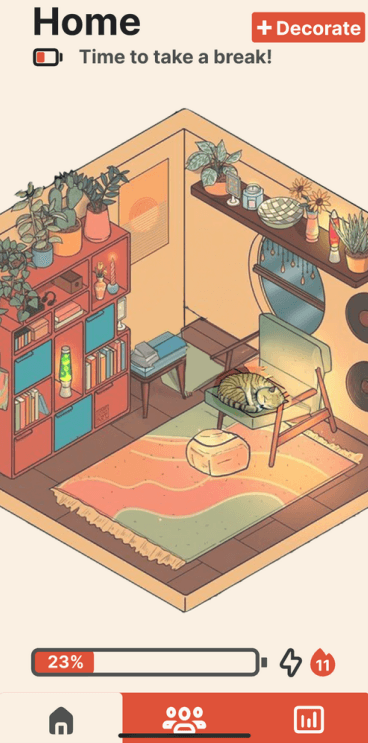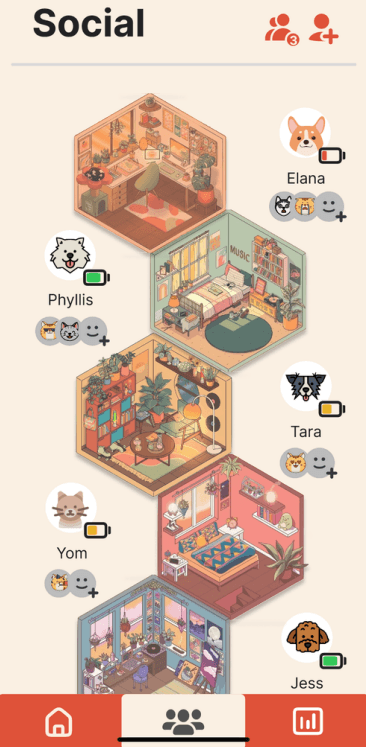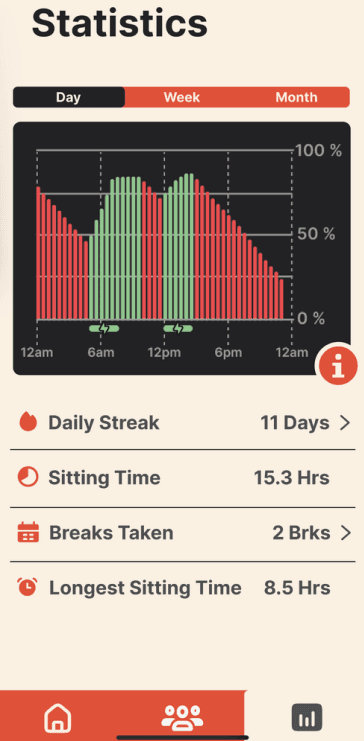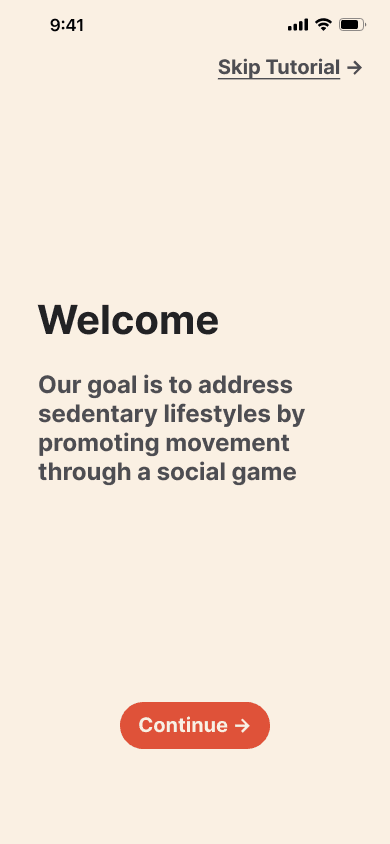
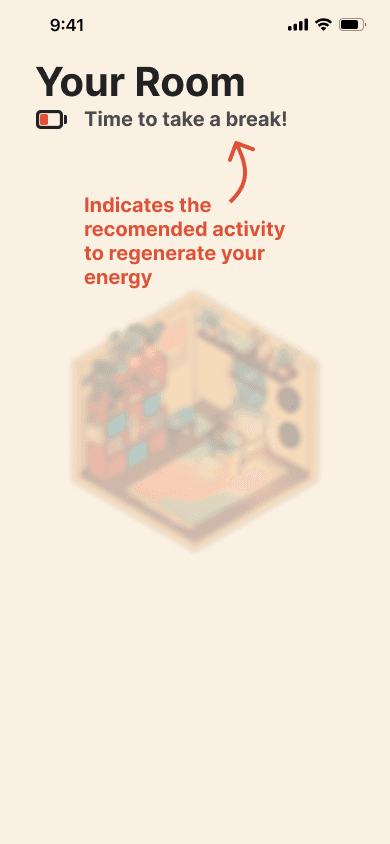
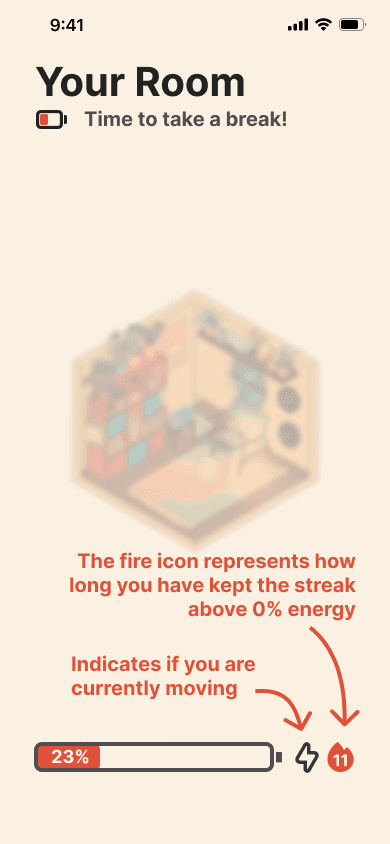
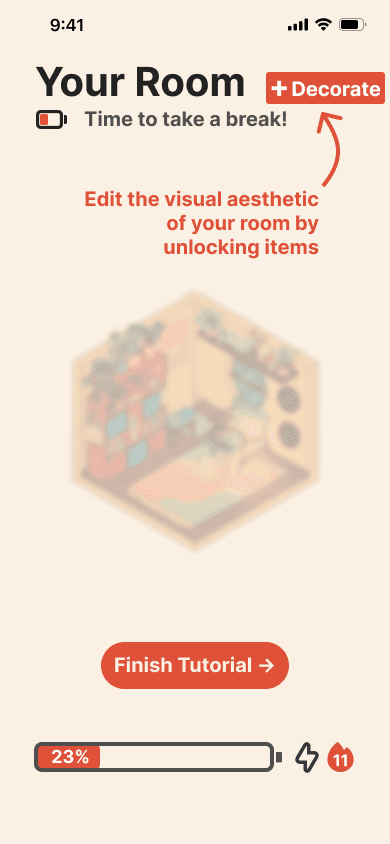
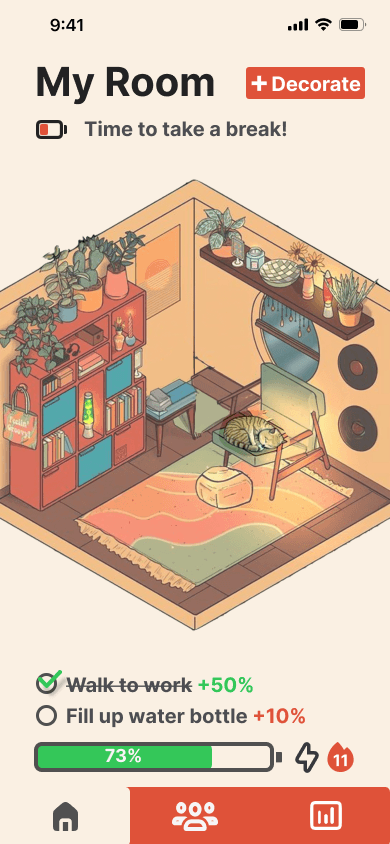
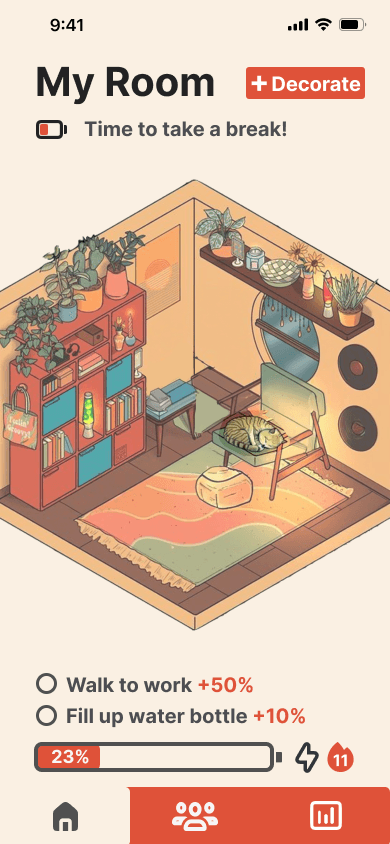
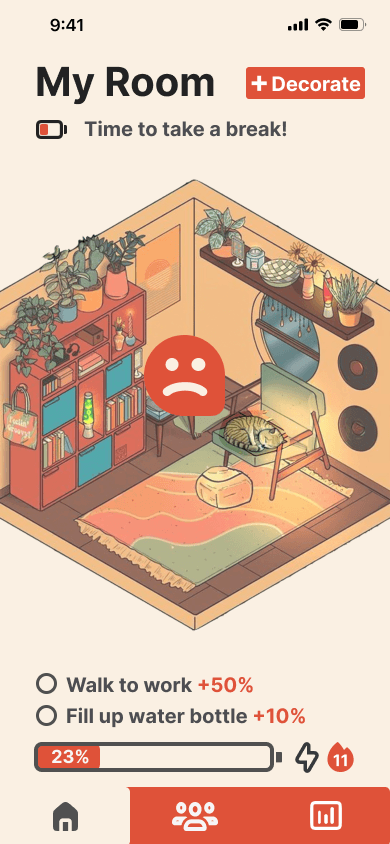
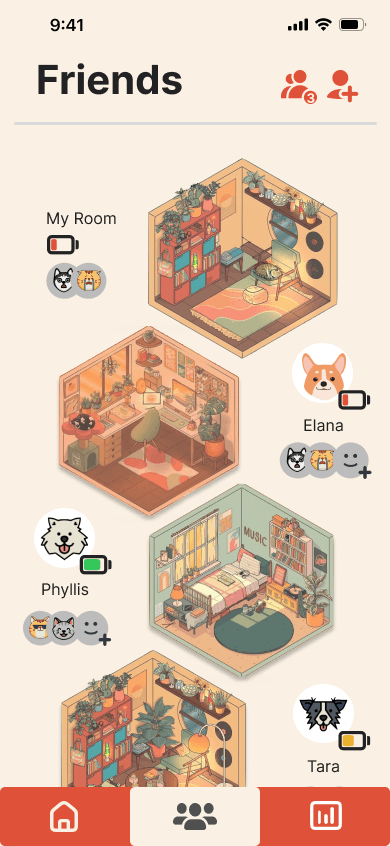
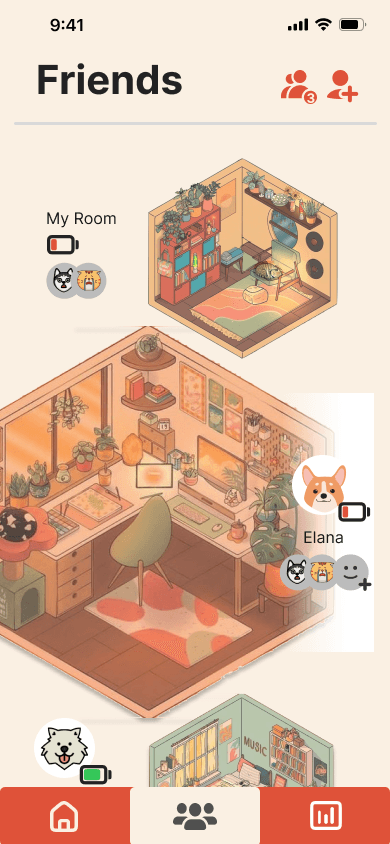


Reduces Sedentary Habits
Changes in contemporary work environments encouraged prolonged sitting, which overall affects work, home life, and transportation. This apps helps reducing these habits.

Gamifies Taking Breaks
Having a similar style of gameplay as 'Tamagotchi' having a pet and items to unlock the user is more incline to keep consistant and when taking breaks.
Uses Social Insentives
Having a social element where users can connect with friends and share progress adds a layer of insentive, in which friends can share and compare pets and rooms.

Break Buddies
is a gamified health app to help take breaks
Initial research to learn and understand deeper about the topic of Sedentary Habits
through Primary Research avenues of Diary Studies, Surveys, Focus Groups
Interviews and Secondary Research which involved reviewing a combination of
Academic Literature, Existing Solutions, and Case Studies.
Research

Secondary
Research
Sedentary Habits

Diary Studies
Survey
Primary
Research
Interviews
Focus Group
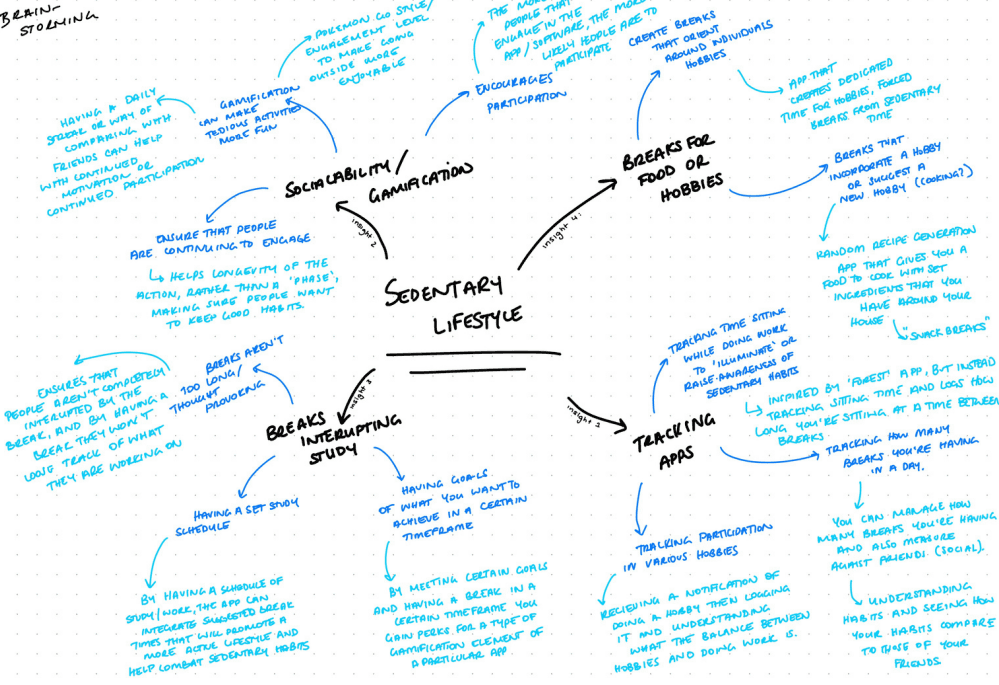
Brainstorming
Gamification
Gamification can make tedious activities more fun
Encourages participation
Ensuing that people are continuing to engage
Hobby Breaks
Create breaks that orient around individuals hobbies
Breaks that incorporate a hobby or suggest a new hobby
Tracking Apps
Tracking time sitting while doing work to illuminate sedentary habits
Tracking how many breaks you’re having in a day
Tracking participation in various hobbies
Study Breaks
Breaks aren’t too long/thought provoking
Having a set study schedule
Having goals of what you want to achieve in a certain timeframe
Crazy 8s
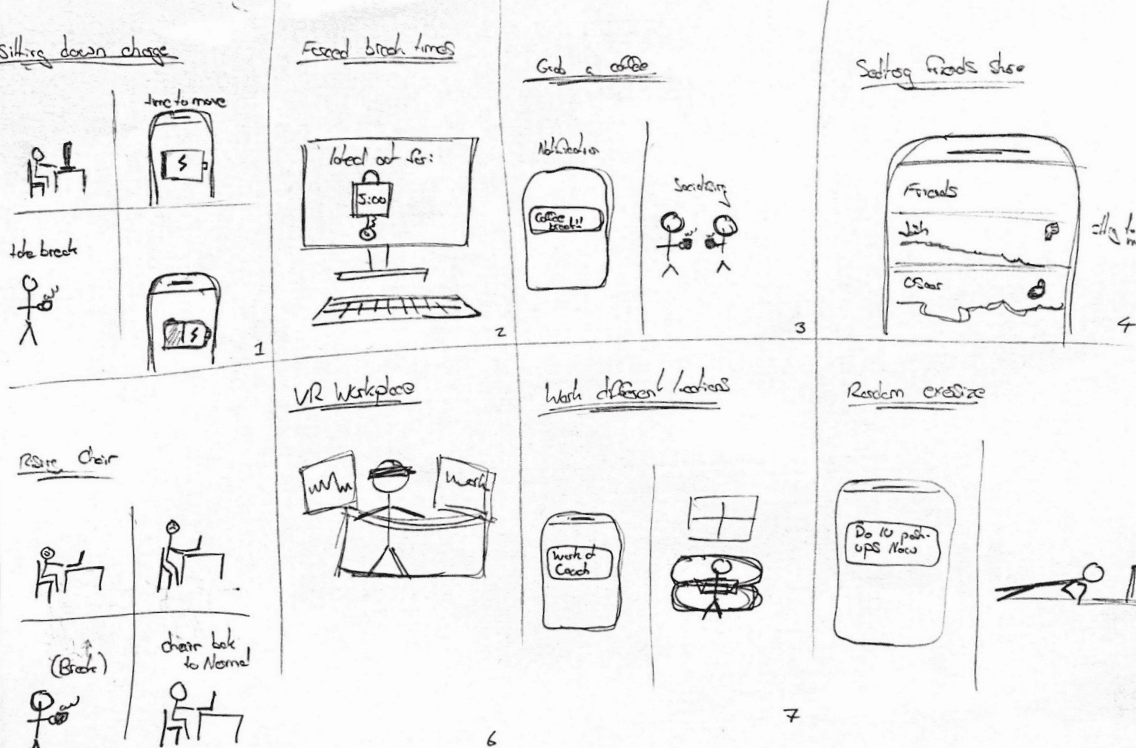
Crazy 8s is an ideation technique that
removes overthinking and gets out solutions fast where you can gather interesting ideas.
Ideas
Sitting down loses charge
Food break times
Grab a coffee
Setting friends share
Rising Chair
VR workplace
Work different locations
Random exercise
Reverse Thinking
Reverse thinking is when you think of a solution to worsen the problem to highlight issues and ideas you wouldn't think of normally.
Positive
A chair that gives you notifications about your time spent on the desk and gives you physical notifications like vibrations and maybe has like a bike pedal or something
Negative
A chair that seems comfortable but ruins your back and messes up your spine
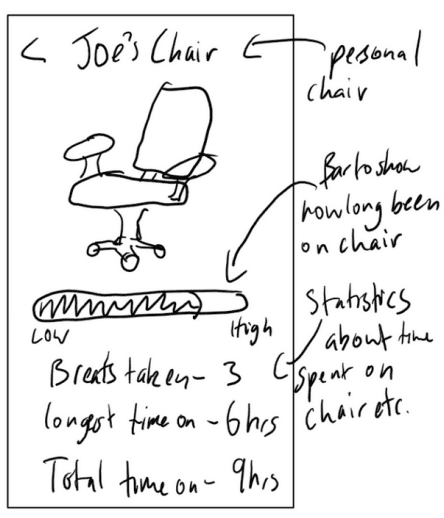
Ideation
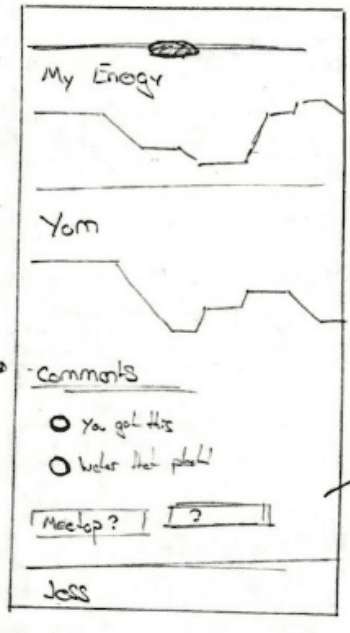
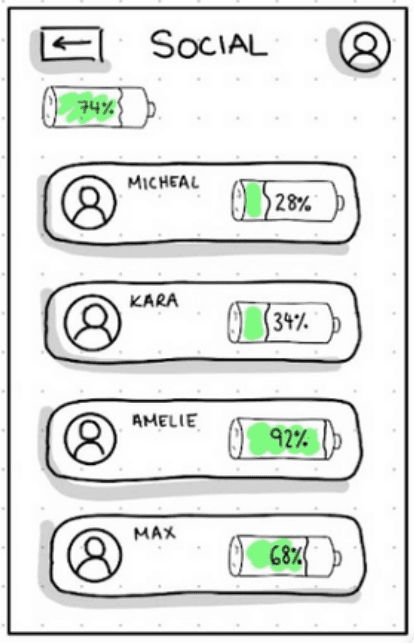
This includes the tracking of other peoples energy and also being able to comment and get reactions to peoples energy levels.
It also showed how the importance of graphing can be a really helpful too for users to help understand thei energy levels during the day.
We used sketching to get down ideas of what each page would look like and then compared ideas and placement to help finalise design ideas.
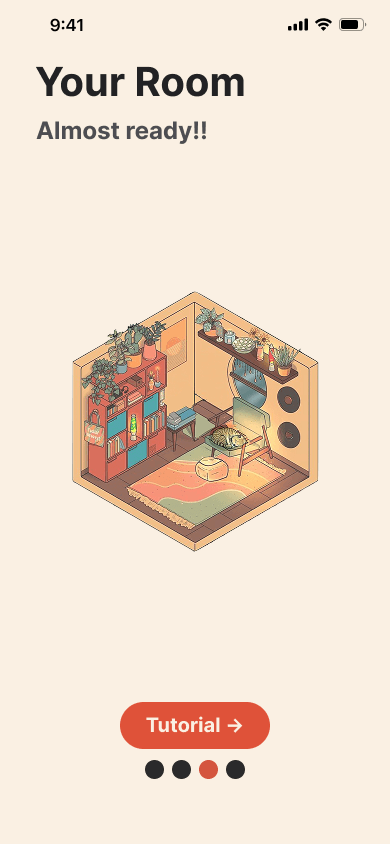
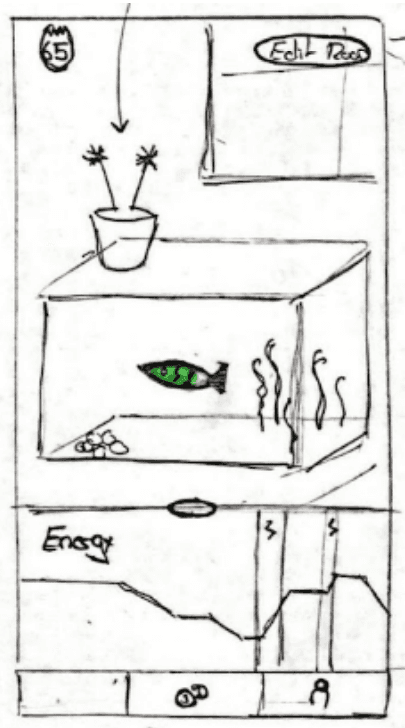
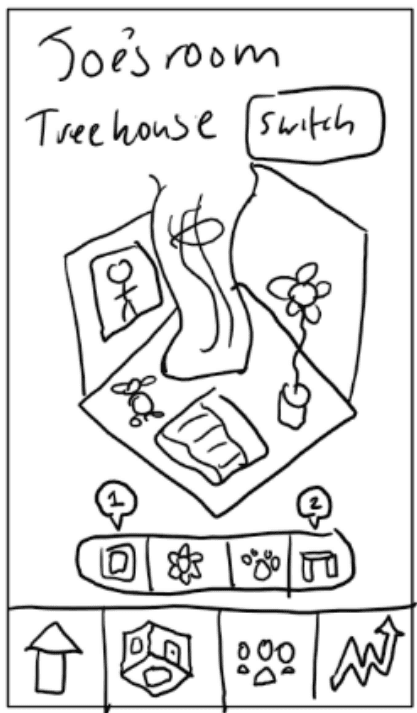
We really enjoyed the idea of having a room like environment which can be customisable and the cube design of the room.
The bottom bar UI is also liked similar to the other sketch which we all thought would be a good implementation.
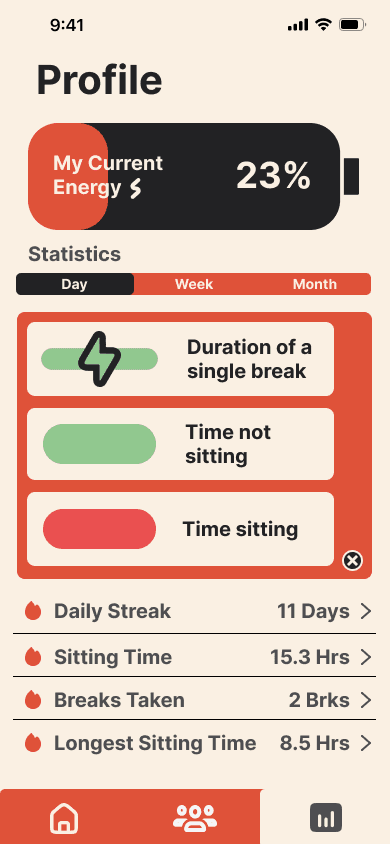
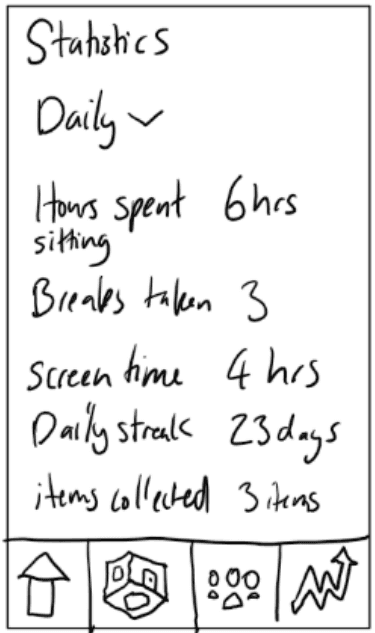
This sketch helped be a blueprint for the profile page which held all the statistics were the user can see their daily, weekly and monthly statistics.
It also showed the types of statistics that the user might want to have like breaks taken, screen time and hours spent sitting
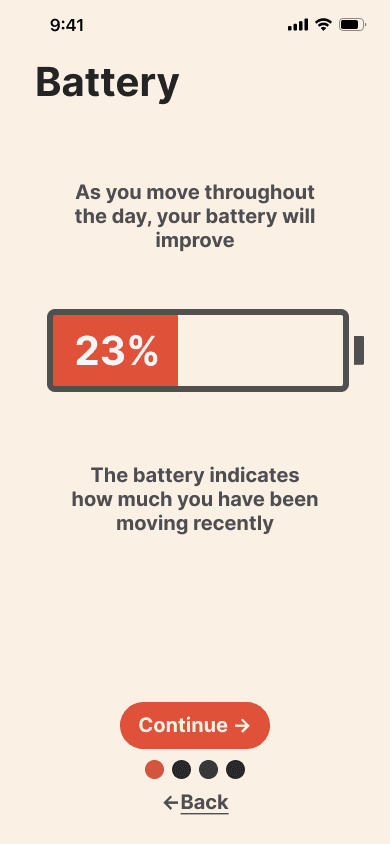
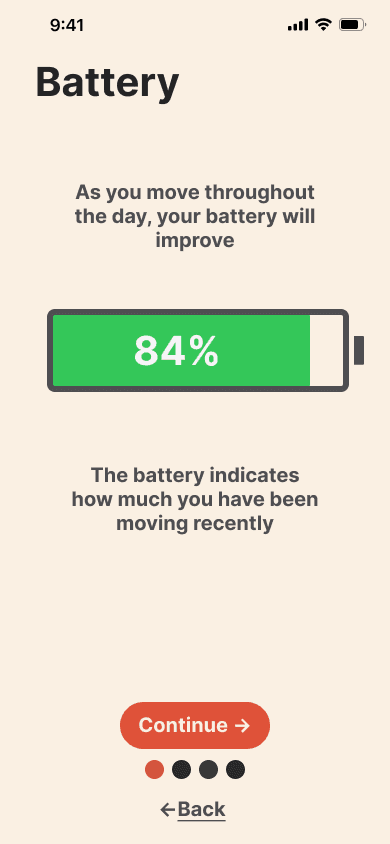
We really liked the design of having the battery filling up to showcase the amount of energy left for the user and having it in the social page as well is a quick and easy indicator compared to having a full graph.
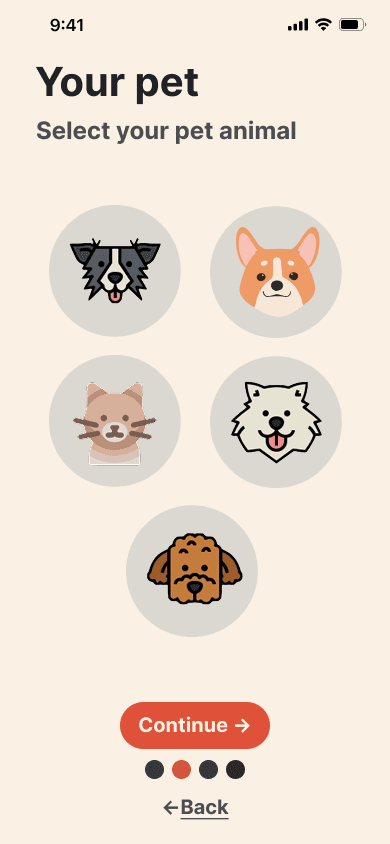
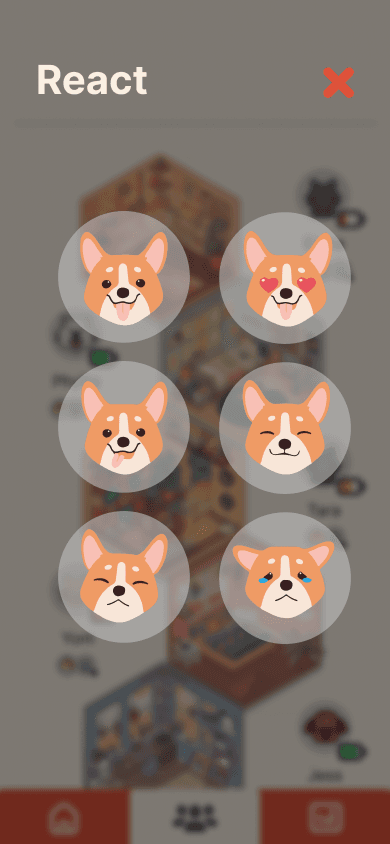
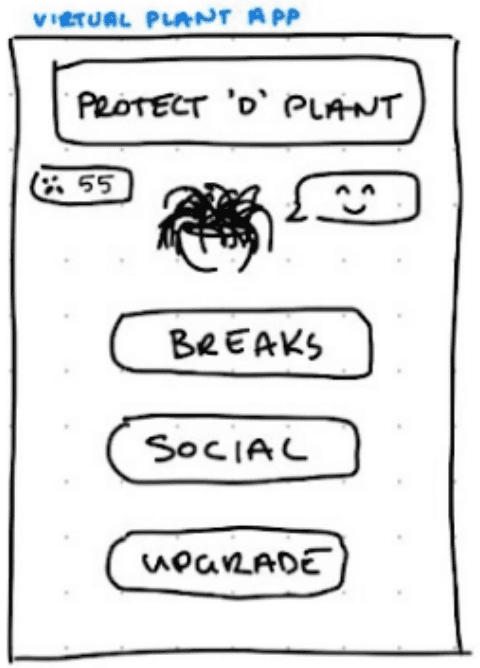
Event though its a plant instead of an animal it portrayed how we want the user to interact with the pet with having emoticons and making the user empathetic with the pet as motivation.
From this sketch we liked the idea of the streak and also the bottom UI which is used to swap between the different sections which would be homepage, social -page and a profile page.
We also liked that the edit room button is in the homepage and easy to access.
First Prototype
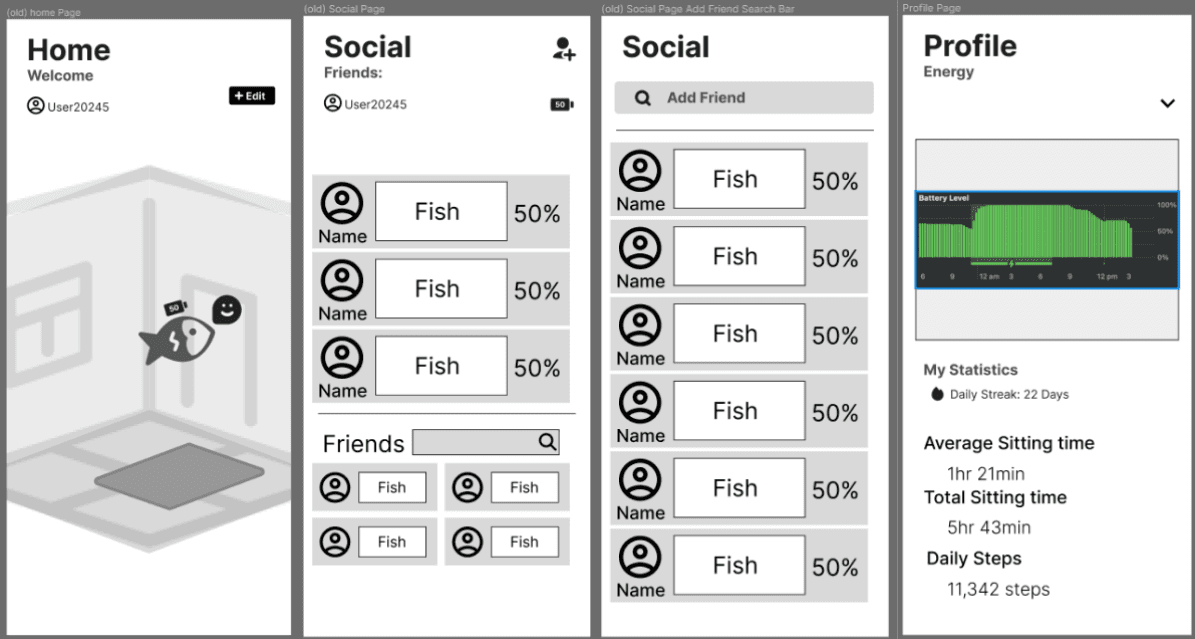
The home page primarily displays the user's room, allowing them to establish a deeper connection with their pet and customise the room's aesthetics.
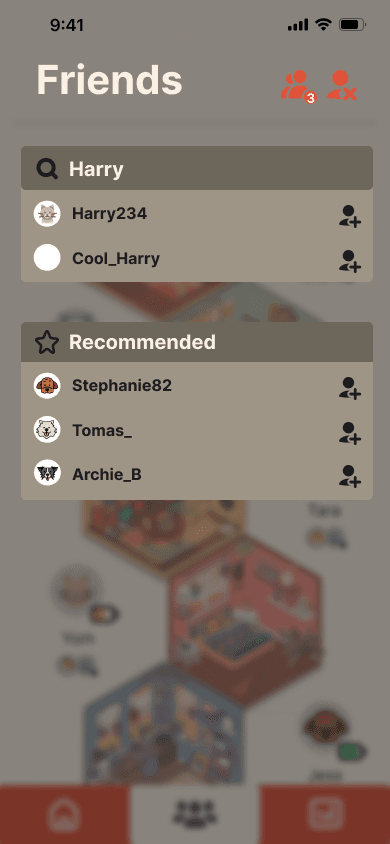
The social page enables users to view and interact with their friends, adding a sociable dimension to the app
On the profile page, users can access key information and statistics that are likely to pique their interest
The home page consists of a room, avatar and an edit option, however overall lacks significant detail or information for the user to take in at a glance, therefore lacking in user feedback.
The social page is very clear, however it is quite cluttered, making it somewhat difficult for users to navigate or visualise the information that they are after. It is also very wordy, lacking more visual elements that users can interact with.
The profile page is poorly laid out with issues in spacing, negative space balance and the overall layout of the page doesn’t feel inviting.
Sketching
Wireframe 1
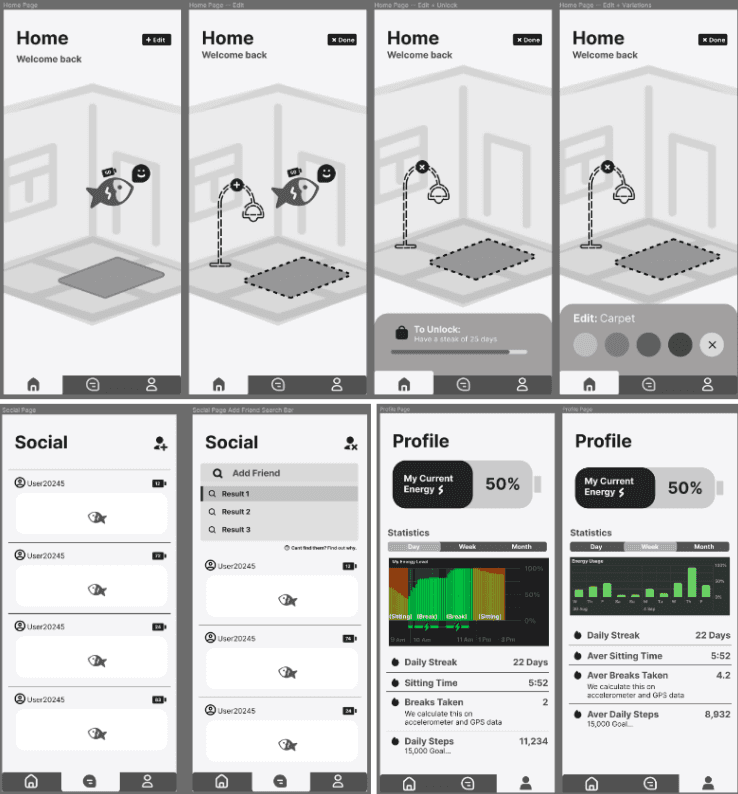
The home page is somewhat similar to the initial wireframe, however it goes more in depth with the ability to edit and personalise the room.
The social page is also more ergonomic, with better spacing, and overall less cluttered. The friends search feature is more simplified and overall creates a better user experience.
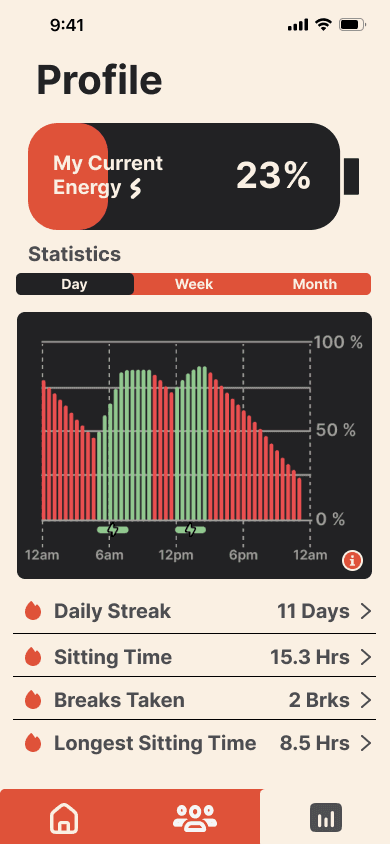
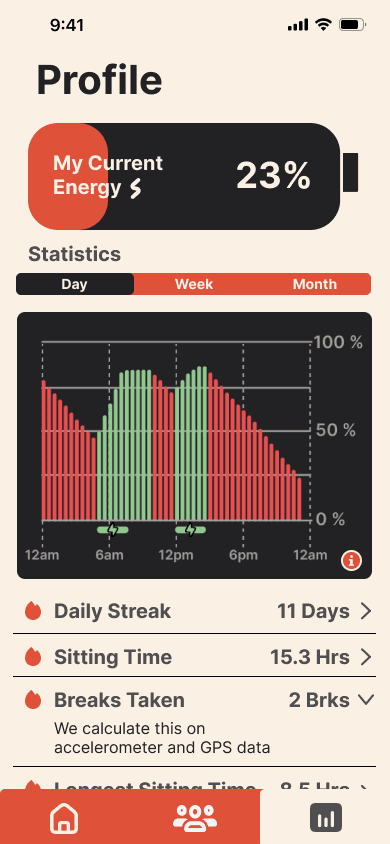
The profile page is similarly better laid out with a large ‘percentage’ button what showcases the users current status, further with a graph that shows their daily progress followed by better laid out statistics.
Wireframe 2
Think Loud
Cognitive Walkthrough